


Corporate Retreat in Portugal: The Complete Guide
Portugal has quietly become one of Europe’s most practical destinations for a corporate retreat. It is well connected, English is widely spoken in professional settings, the cost base is lower than in most of Western Europe, and you can move a team from an airport to a coastal or vineyard property in under an hour. For companies with distributed teams across Europe, that combination is hard to beat.
This guide covers what actually matters when you are the person responsible for making it happen: which regions suit which kind of retreat, what a realistic budget looks like, when to go, how far ahead to book, how to structure the agenda, and how to know afterward whether it was worth the money. Everything here draws on retreats and offsites we’ve run for teams like Revolut and PropHero, not on brochure copy.
Why companies choose Portugal for a corporate retreat
Most destination shortlists get built on photos. Retreats get judged on logistics. Portugal holds up on both.
Connectivity. Lisbon is a major European hub with direct routes from most Western and Northern European capitals. Porto and Faro both take significant low-cost traffic from the UK, Ireland, Germany, and the Netherlands. If your team is spread across three or four countries, you can usually get everyone landing within the same afternoon window without routing anyone through a second connection.
Short transfers. Lisbon airport sits inside the city. Cascais is about 40 minutes away, Sintra around 45, the Comporta area roughly 90. From Faro, most of the Algarve is within an hour. From Porto, the Douro Valley is around 90 minutes. Short transfers are not a comfort detail they are what lets you land in the morning and still run a working session that same afternoon.
Cost efficiency. For comparable quality of accommodation, food, and venue, Portugal typically runs below France, Italy, or the Nordics. That difference is often what turns a two-day retreat into a three-day one, or what lets you upgrade from a conference room to a private property.
Working conditions. English is standard in hospitality and event services. The country is in the EU and the eurozone, which removes visa and currency friction for most European teams. Connectivity is reliable even in rural properties, which matters if part of the group needs to stay reachable.
Season length. The usable window is long. Coastal Portugal is comfortable from April through October, and Lisbon and Porto work year-round for indoor-led formats. That gives you far more calendar flexibility than a destination with a three-month season.
First, be clear about what you are actually planning
The single most common cause of a disappointing retreat is a mismatch between the format and the goal. These are not interchangeable words, and the design changes completely depending on which one you mean.
A corporate retreat is a multi-day, off-location gathering with a working core: strategy, alignment, culture, and connection. It usually runs two to four days and mixes structured sessions with unstructured time. It is the broadest of these formats and the one most often used to reset a team after a period of change.
A company offsite is generally shorter and more agenda-driven. The purpose is to get a specific piece of work done, a planning cycle, a reorg, a product roadmap, away from daily interruptions. The location matters less than the room, the facilitation, and the output.
Team building is an activity or program designed to improve how people work together. It can sit inside a retreat or an offsite, or it can stand alone as a half-day or full-day. It is a component, not a format.
A sales kickoff is a performance event with a commercial agenda: targets, enablement, pipeline, recognition. It has a different rhythm, a different room setup, and usually a much larger group.
Corporate incentive travel is a reward. The team earned it. Content is minimal by design, and the experience itself is the point.
Portugal works for all of these, but the region you pick and the property you book should follow from which one you are running. A leadership offsite for twelve people and an incentive trip for eighty do not belong in the same venue.
If you are still deciding between formats, our breakdown of what a corporate retreat involves and how it differs from a leadership offsite is the fastest way to narrow it down.
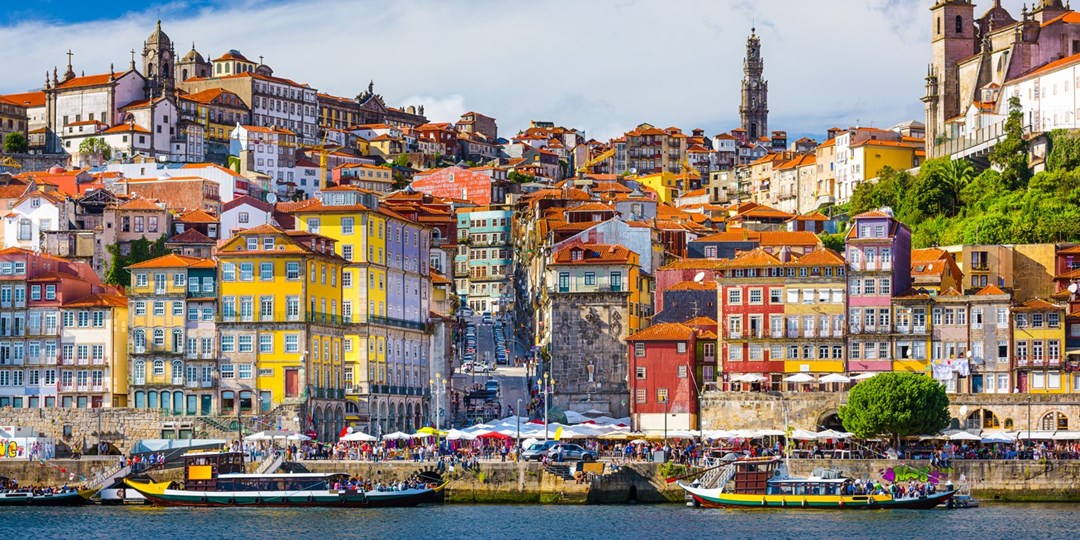
Best regions in Portugal for a corporate retreat
Lisbon and Cascais, the default for mixed international groups
Lisbon is the easiest answer when your team is flying in from several countries and you want zero transfer complexity. The city has the widest range of venues, from design hotels with proper meeting space to converted industrial buildings, and it gives you a real evening program without organizing transport.
Cascais, on the coast just west of the city, is the more common choice for retreats specifically. You keep Lisbon’s airport access but gain a quieter setting, ocean-facing properties, and enough separation from the city that people actually disconnect. It is the strongest all-round option for groups of roughly 20 to 100.
Best for: company-wide retreats, leadership offsites, first-time retreats where logistics risk should be minimal.
Sintra and the Comporta area, for smaller, high-focus groups
Sintra’s estates and palaces make an unusual setting for a small executive group, and the landscape does a lot of the work in getting people out of their normal headspace. Comporta, about ninety minutes south of Lisbon, offers pine forest, long beaches, and a set of low-key luxury properties that suit groups who want privacy and a slower pace.
Both are better for depth than for scale. Neither is where you put a hundred people.
Best for: executive retreats, leadership teams of 8 to 30, strategy work that needs uninterrupted focus.
The Algarve, for larger groups and warmer shoulder seasons
The Algarve has the infrastructure that the rest of the country doesn’t: large resort properties with real conference capacity, plenty of rooms, and the ability to absorb a group of 150 or more without splitting it across hotels. Faro airport is well served from Northern Europe, and the region holds usable weather later into autumn and earlier in spring than the rest of the country.
The trade-off is that some of the Algarve reads as a holiday destination, which can undercut the seriousness of a working agenda if you pick the wrong property. Sagres and the western Algarve feel considerably more rugged and less resort-like than the central strip.
Best for: sales kickoffs, incentive travel, large company retreats, shoulder-season events.
Porto and the Douro Valley, for culture-led retreats with a strong hook
Porto is compact, characterful, and cheaper than Lisbon. The Douro Valley, ninety minutes inland, gives you terraced vineyards, river properties, and quintas that host small groups extremely well, the whole valley is a UNESCO World Heritage Site, which adds a genuine sense of occasion without any effort on your part. The wine culture provides a natural narrative for an experience program without needing to manufacture one.
Group sizes are more constrained here, most quintas are genuinely small, so the Douro suits leadership groups and senior teams rather than full-company events.
Best for: leadership retreats, client events, incentive travel for smaller high-performing groups.
Ericeira and Peniche, for active, informal team cultures
The surf coast north of Lisbon is a different proposition entirely. Ericeira is a World Surfing Reserve, one of only a handful in the world, Peniche has consistent waves and a working-town feel, and both attract companies that want a retreat built around shared physical activity rather than shared meals.
This works well for younger teams, tech and product organizations, and cultures where a formal hotel setting would feel wrong. It works badly if part of your group has mobility constraints or simply does not want to get in the water, always plan a parallel track.
Best for: team building retreats, product and engineering teams, informal cultures, groups of 15 to 60.
Alentejo, for genuine disconnection
Inland Alentejo is wide, quiet, and empty. The herdades (large rural estates) offer full-property buyouts, which means your group has the place entirely to itself. If the goal is for people to be present and unreachable, this is the strongest option in mainland Portugal.
It requires more ground transport and there is less to do outside the property, which is precisely the point for some retreats and a problem for others.
Best for: strategy retreats, culture and values work, full buyouts, groups of 20 to 80.
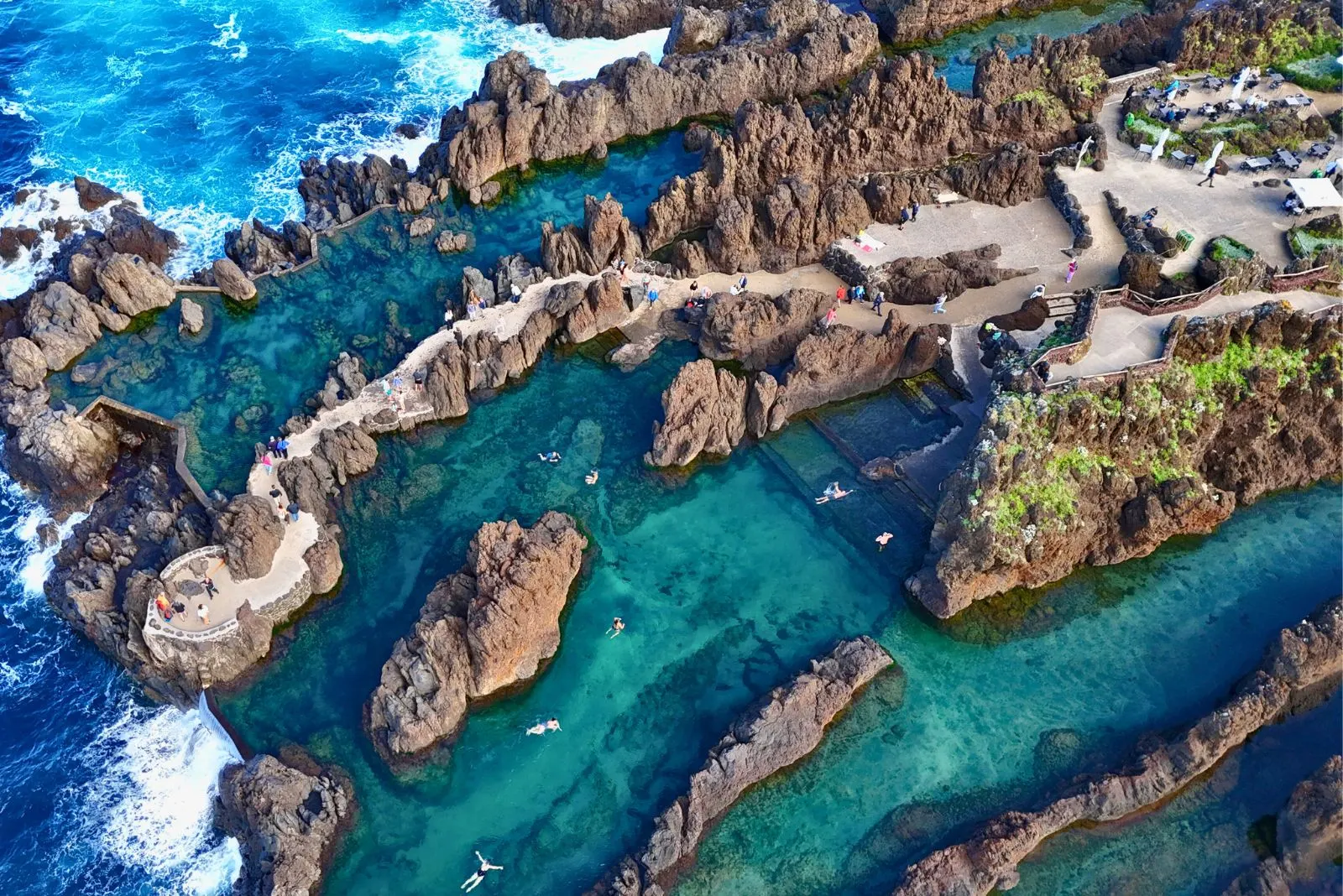
Madeira and the Azores, for the retreat that needs to feel different
Both islands deliver a genuine sense of remove and dramatic landscape. Madeira has better flight access and more hotel capacity; the Azores are wilder and harder to reach, especially from continental Europe.
Add a buffer day to your budget and your schedule. Island logistics are less forgiving, and weather can move plans.
Best for: milestone retreats, incentive travel, companies that have already done the mainland.
What a corporate retreat in Portugal costs
Anyone who quotes you a single per-person figure without asking about group size, season, and property type is guessing. The variables that actually move the number are, in order: accommodation standard, whether you buy out the property, season, group size, and how much of the program is externally facilitated.
As a planning starting point, these are the ranges we tend to work within for a three-day, two-night retreat in Portugal, per person, excluding international flights:
- Standard: comfortable four-star accommodation, shared meeting space, one group activity, most meals included.
- Mid-range: four- or five-star property or a partial buyout, dedicated meeting space, two or three curated experiences, full board, some external facilitation.
- Premium: full property buyout, five-star or boutique estate, bespoke experience program, professional facilitation, dedicated on-site coordination, private transfers throughout.
The jumps between these tiers are mostly driven by exclusivity rather than by the room itself. A full buyout is often the single largest line item, and frequently the one with the biggest effect on how the retreat actually feels, because a group that has the property to itself behaves differently than a group sharing a hotel with holidaymakers.
Two cost notes specific to Portugal:
Shoulder season is a real lever. Moving a retreat from July to late September or from June to early May can shift accommodation costs meaningfully in the Algarve and on the Lisbon coast, with better working conditions as a bonus.
Ground transport adds up faster than people expect. Portugal’s short transfers are an advantage, but if your agenda involves moving 60 people to three separate locations across two days, coach logistics become a serious line item. Fewer, better-chosen locations usually beat more of them.
[Interno] Rangos numéricos: pendientes de Farah. Cuando los tengamos, insertar una tabla de tres columnas (Standard / Mid-range / Premium) con horquilla €/persona/día. No publicar cifras sin validar.
✓ Plan before you budget
Knowing what you actually need to book, transfers, venue type, group activities, speaker setup, is what lets you get accurate quotes. Our checklist walks through every decision point in the right order, so you don’t miss a line item or ask the wrong questions.
When to go
April to June is the strongest window overall. Comfortable temperatures across the whole country, long days, lower prices than peak summer, and low weather risk for outdoor sessions.
September to October is equally good and often better value, particularly in the Algarve and the Douro, where September is harvest season and adds a genuine seasonal hook.
July and August bring peak heat inland and peak prices on the coast. Alentejo in August is genuinely hot for outdoor activity. If you must run in summer, favor coastal properties with sea breeze and schedule working sessions for the morning.
November to March is viable for Lisbon and Porto if the retreat is indoor-led. Rain is likely, but the cities work well, prices drop substantially, and availability at otherwise-impossible properties opens up. Do not plan a beach-dependent agenda in this window.
How far ahead to plan
Timelines slip for predictable reasons. As a working guide:
6 to 9 months out. Lock the dates, the group size, and the objective. Dates first, always: property availability is what constrains everything else, and the good ones for peak-season dates go early.
4 to 6 months out. Shortlist and confirm the venue. Book flights while routes are still cheap. Confirm the broad shape of the agenda so you know what kind of space you need.
2 to 3 months out. Build the detailed program, book activities and facilitators, confirm menus and dietary requirements, brief internal speakers.
3 to 4 weeks out. Communicate the full agenda to the team. Confirm rooming, transfers, and any pre-work. Collect accessibility and dietary needs properly rather than assuming.
1 week out. Final numbers to the venue, contingency plan for weather-dependent sessions, on-site contact list.
For groups over 50, or for any date between June and September, add two months to the front of this timeline.
Designing the agenda
The most common failure mode is overpacking. A retreat where every hour is scheduled produces a tired team and no real conversation. The unscheduled parts are where a lot of the value actually lands.
A structure that works consistently for a three-day, two-night retreat:
Day 1 Arrival and context. Arrivals through the morning and early afternoon. One opening session in the late afternoon that sets context and objectives, kept short. Group dinner. No heavy content on day one; people are still traveling.
Day 2 The working core. This is the day that justifies the trip. Two focused working blocks in the morning, a shared experience or activity in the afternoon, and an evening that is deliberately less structured than day one’s. Put your hardest content in the first morning block.
Day 3 Convergence and close. One session that turns the previous two days into decisions and owners. Then close cleanly and let people travel. Do not schedule anything meaningful after lunch on a departure day, attention is already gone.
Three principles that hold regardless of format:
- Every session needs an owner and an output. “Discussion about strategy” is not a session. “Agree the three priorities for Q1, with an owner per priority” is.
- Leave real gaps. Two hours of unstructured time is not wasted time. It is where the conversations happen that people remember six months later.
- Design for the person who doesn’t want to be there. In any group there are people who find retreats draining. Optional tracks, quiet space, and a clear end time to each evening make the difference between inclusion and endurance.
Start with a structure that works
A three-day retreat is deceptively easy to overcrowd. Our template shows a day-by-day breakdown, with the gaps built in, so you can adapt it to your content without burning out the room.
Get the 2–3 Day Agenda Template →
Team building and experiences in Portugal
The activities are the part everyone remembers, and the part most likely to be chosen badly. The test is simple: does this experience create shared context, or is it just a scheduled block?
Portugal offers a strong range without needing to invent anything:
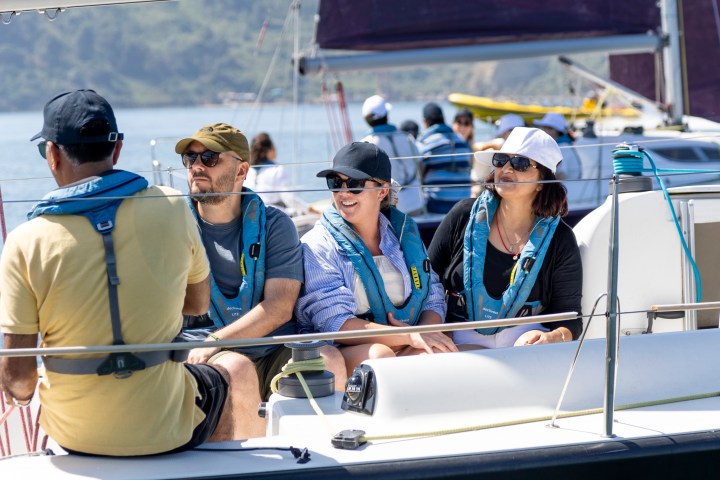
- Coastal and water-based; surf sessions in Ericeira or Peniche, sailing from Cascais or Lagos, kayaking along the Algarve’s cliffs and sea caves.
- Food and wine; Douro Valley harvest and blending sessions, Lisbon market-to-table cooking challenges, Alentejo wine estate experiences.
- Cultural and urban; Lisbon and Porto city challenges, azulejo tile workshops, fado sessions, Sintra estate exploration, and locally guided experiences built around what a destination actually does well rather than a generic tour.
- Nature and active; hiking in Arrábida or the Serra de Sintra, cycling in the Alentejo, canyoning in Madeira, whale watching in the Azores.
- Facilitated formats; structured workshops, external facilitation for strategy or culture sessions, and workshops led by industry speakers.
Two practical rules. First, always run a parallel option: any activity with a physical requirement excludes someone, and that person should have somewhere good to be rather than sitting it out. Second, resist scheduling three activities in three days, one well-chosen shared experience beats three forgettable ones, and it protects the agenda’s actual working time.
See how we approach team building as part of a full retreat rather than as an add-on.
Mistakes worth avoiding
Choosing the destination before the objective. Portugal is not the answer to every brief. If the goal is a two-day product planning session for eight people, the venue matters far more than the country. Define the outcome first.
Underestimating arrival day. People landing from four countries do not arrive fresh and simultaneously. Treating day one as a full working day is the fastest way to lose the room for the rest of the retreat.
Booking a hotel instead of a space. Plenty of beautiful Portuguese properties have poor meeting facilities: bad acoustics, no natural light, no breakout options. Ask for photos of the working space, not the pool.
Ignoring the group’s composition. Surfing in Ericeira is a great retreat for some teams and a miserable one for others. The activity should match the culture you have, not the one on the brochure.
No follow-through. A retreat with no post-retreat owner list is an expensive week away. Decisions made on-site need names and dates attached before people fly home.
Running it entirely in-house to save budget. It rarely does. The hours your team spends sourcing venues, negotiating contracts, and coordinating suppliers in a country they don’t know are real hours, and the results are usually worse.
How to know whether it worked
Define the measure before you go, not afterward. What you track depends on the objective:
- Alignment retreats: Can people state the priorities two weeks later, unprompted, and do they match?
- Culture and connection retreats: Cross-team collaboration, internal survey movement, and retention over the following two quarters.
- Sales kickoffs: Pipeline generated, ramp time, quota attainment in the following quarter.
- Onboarding and integration retreats: Time to productivity, and early attrition among the cohort.
Run a short survey within 72 hours while impressions are fresh, and a second one at 60 to 90 days to see what actually stuck. The gap between those two is usually the most informative data you get.
Working with a local partner
You can plan a retreat in Portugal yourself. Whether you should depends on how much your own time is worth and how much risk you are willing to carry on the day.
A local partner earns their fee in the places that are invisible until they go wrong: knowing which properties actually deliver on their meeting space, holding supplier relationships that produce availability when a public search says there is none, negotiating rates you would not be quoted directly, and having someone on the ground when a supplier cancels at 8am on day two.
The question worth asking any partner is not whether they can book a hotel. It is whether they design the program around your objective or around their supplier list.
At Wepleia we build corporate retreats, offsites, team building programs, and incentive travel across Spain, Portugal, and Europe, starting from what you need the team to leave with, then working backward to the destination, the venue, and the agenda.
Frequently asked questions
How many days should a corporate retreat in Portugal be? Three days and two nights is the most common structure and usually the right one. Two days works if your team is already in Europe and travel is short, but it leaves little room for anything beyond the agenda. Four days makes sense for company-wide retreats, for teams flying in from outside Europe, or when the objective genuinely needs the extra depth.
Which Portuguese airport should we fly into? Lisbon for the Lisbon coast, Cascais, Sintra, Comporta, and most of Alentejo. Porto for the Douro Valley and the north. Faro for the Algarve. If your group is arriving from multiple countries, Lisbon almost always produces the cleanest set of arrival times.
Do we need to speak Portuguese? No. English is standard across hospitality, venues, and event suppliers, particularly in Lisbon, Porto, and the Algarve. Learning a few words is appreciated but nothing in the planning process requires it.
Is Portugal cheaper than Spain for a corporate retreat? They are broadly comparable, and the difference depends far more on region and property than on country. Rural Alentejo and inland Portugal tend to run below the Spanish coastal equivalents; central Lisbon and the premium Algarve are on par with Barcelona or Mallorca. Portugal often wins on full-property buyouts, where you get exclusivity at a lower entry point.
Can we combine Portugal and Spain in one retreat? It is possible, Seville to the Algarve, or Porto to Galicia, are both short drives, but it rarely helps. Splitting a retreat across two bases costs you half a day in transit and dilutes the sense of place. If you want both countries, run two retreats.
What group sizes does Portugal handle well? Groups from around 10 to 150 are straightforward. Above 150 you are effectively limited to the larger Algarve resorts and a handful of Lisbon venues, and the shortlist narrows quickly. Under 20, the country opens up considerably small quintas, estates, and boutique properties that larger groups cannot use.
When should we book for a summer retreat? For June through September dates, start eight to nine months out. Portugal’s best properties for corporate groups are limited in number, and peak-season availability disappears well before the season does.
Is Portugal a good destination for an incentive trip rather than a working retreat? Yes, and it is arguably a stronger incentive destination than a retreat one. The Algarve, Madeira, and the Douro all deliver the reward feeling that incentive travel needs, and the same properties work well for corporate celebrations if recognition is part of the goal. The design is different, though, minimal content, more experience, and a much higher bar on accommodation.
Planning a corporate retreat in Portugal?
Tell us the objective, the group size, and the rough dates. We will come back with a shortlist of regions and properties that fit; not a generic proposal.


